Trails
Cork oak
Common name –Cork oak
Scientific name –Quercus suber
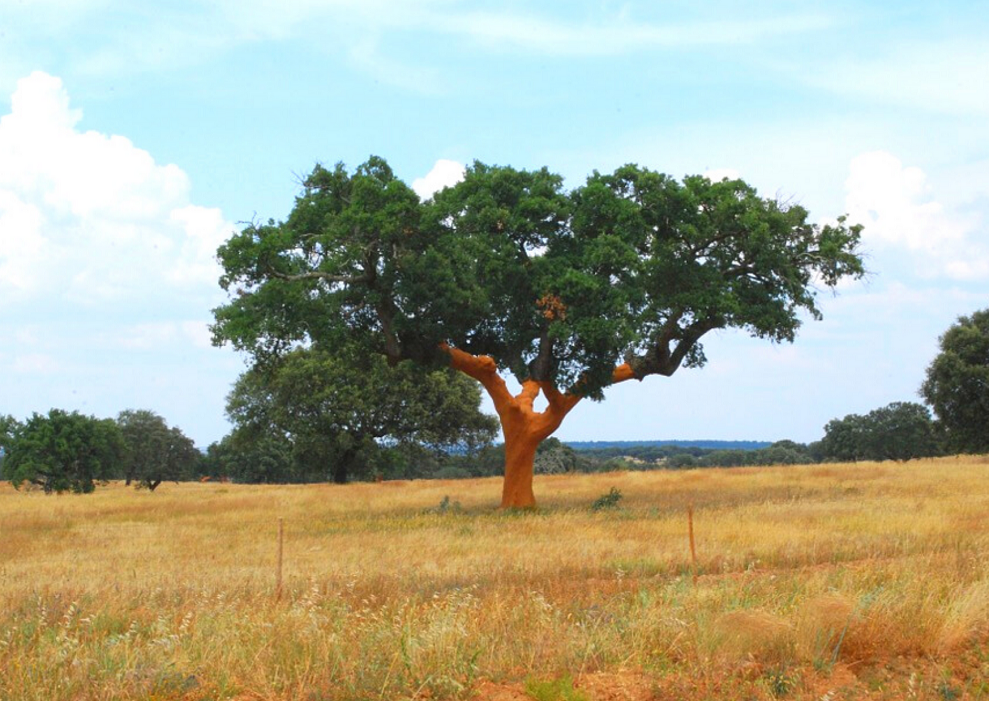
Description –The cork oak, scientifically known asQuercus suber, is found predominantly in the Alentejo and Ribatejo regions. It is distinguished by its thick bark, from which cork is harvested.
This tree belongs to the Fagaceae family, like oak and chestnut trees. It is evergreen, retaining green leaves throughout the year, and can live for 150–250 years or more. Cork oaks usually reach 10–20 metres in height and adapt well to poor, dry soils, showing great resistance to heat and water scarcity—typical Mediterranean conditions.
The first cork harvest takes place when the tree is around 25 years old and is then repeated every nine years. Portugal is the world leader in cork production, accounting for more than half of global output.
In recognition of its historical, environmental and economic importance, the cork oak was officially declared Portugal’s National Tree in 2011. It represents not only natural wealth, but also resilience, sustainability and the deep bond between the Portuguese people and nature.